Barcode & ingredient scanner
Is it halal? Find out before it reaches the basket.
Scan the barcode, or snap a photo of the ingredient list. Halal Scanner reads every ingredient and tells you whether the product is halal, mushbooh, or not halal — with a health score and allergen warnings alongside.

30 free scans — no card, no account needed
- Results in about 3 seconds
- 9 languages
- No sign-up required
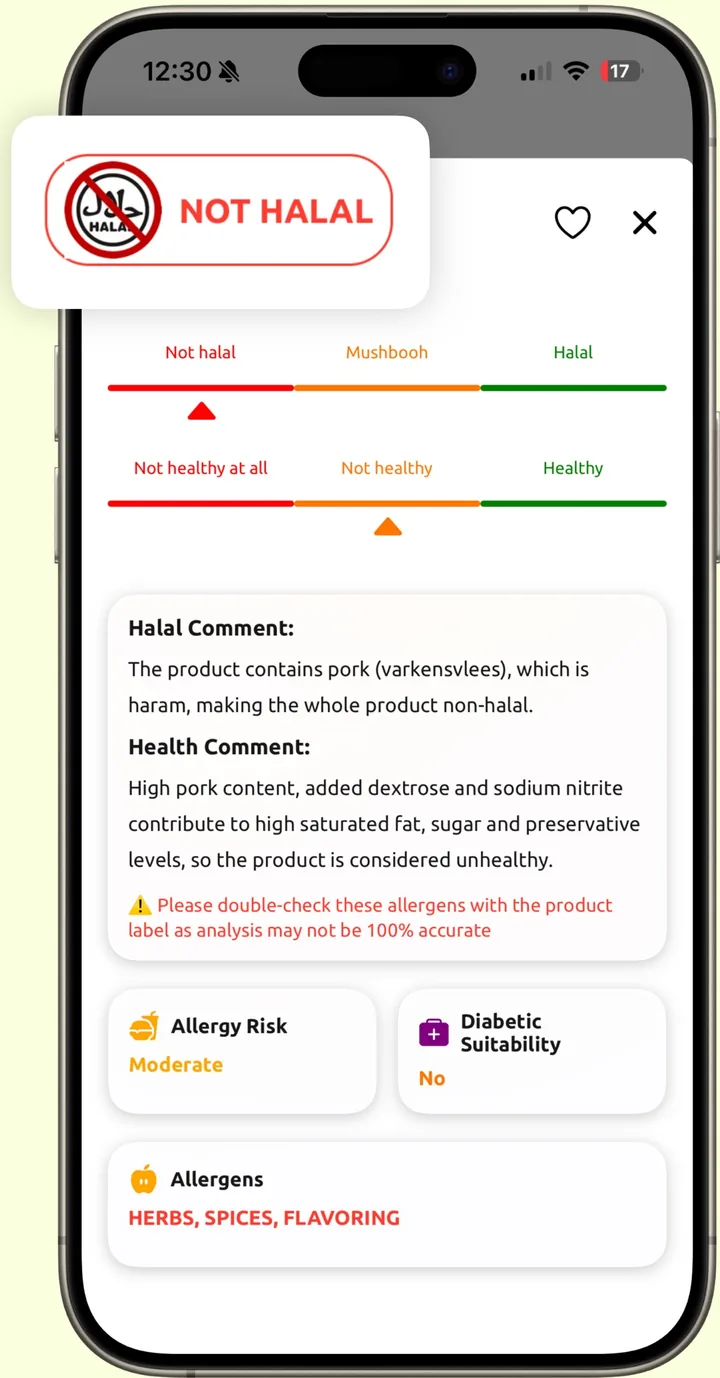
How it works
From supermarket shelf to a clear answer in four steps.
-
1
Scan the barcode
Point the camera at the barcode. The fastest route — the product is identified instantly.
-
2
Or photograph the ingredients
Not in the database? Take a photo of the ingredient list on the back of the pack instead.
-
3
AI reads every ingredient
Each additive, E-number, and derivative is checked against its likely source — animal, plant, or synthetic.
-
4
Get a clear verdict
Halal, mushbooh, or not halal — with the reasoning, a health score, and allergen alerts. In roughly 3 seconds.
Three answers, never a shrug
Most ingredient questions aren't yes-or-no. Halal Scanner says which ingredient caused the verdict, so you can decide for yourself.
-
Halal
No ingredient of concern found. Every item on the label traces to a plant, mineral, or synthetic source.
-
Mushbooh
Doubtful. An ingredient like E471 or glycerin can come from either plant or animal fat, and the label doesn't say which.
-
Not halal
A clearly impermissible ingredient is present — pork derivatives, lard, or alcohol as an ingredient rather than a trace.
See it in action
Real screens from the app — from the first scan to your saved history.
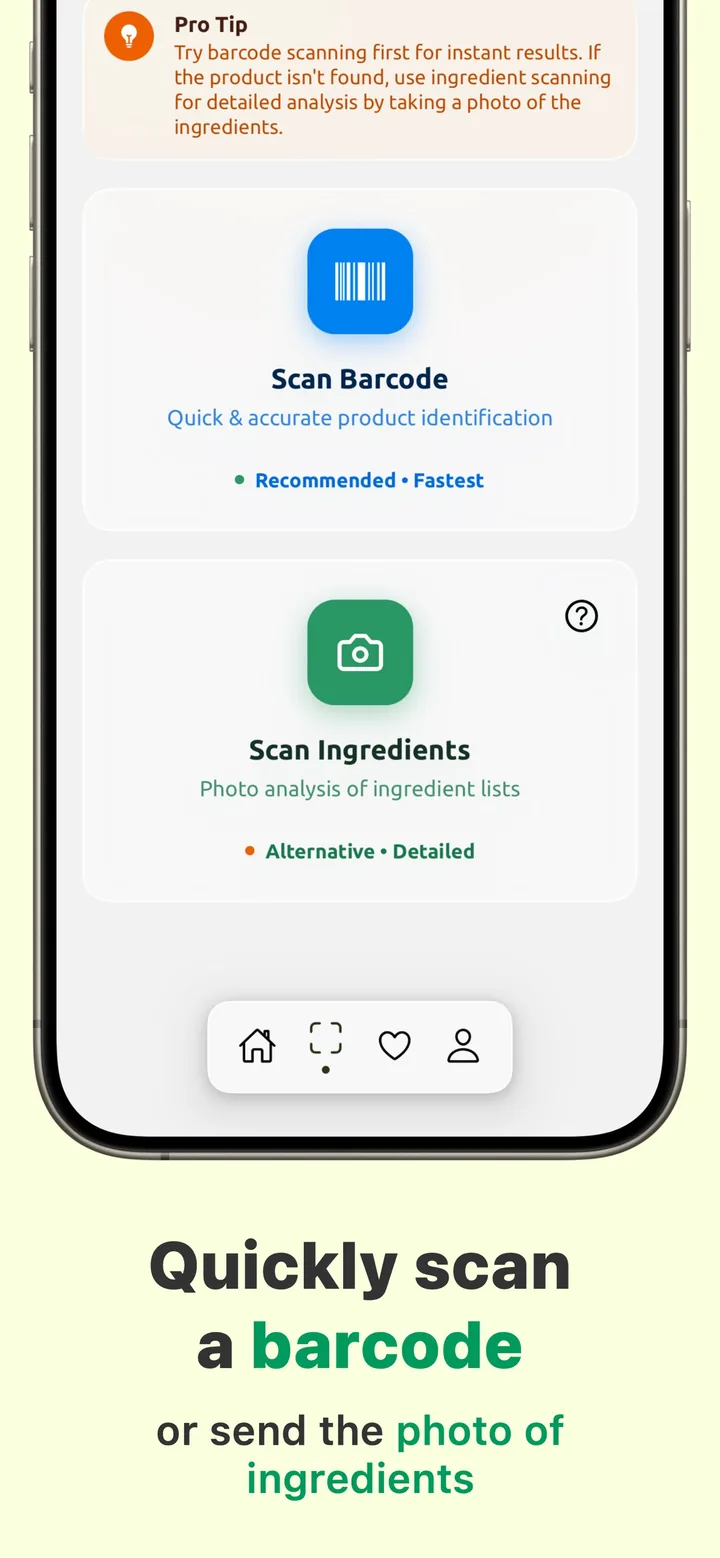
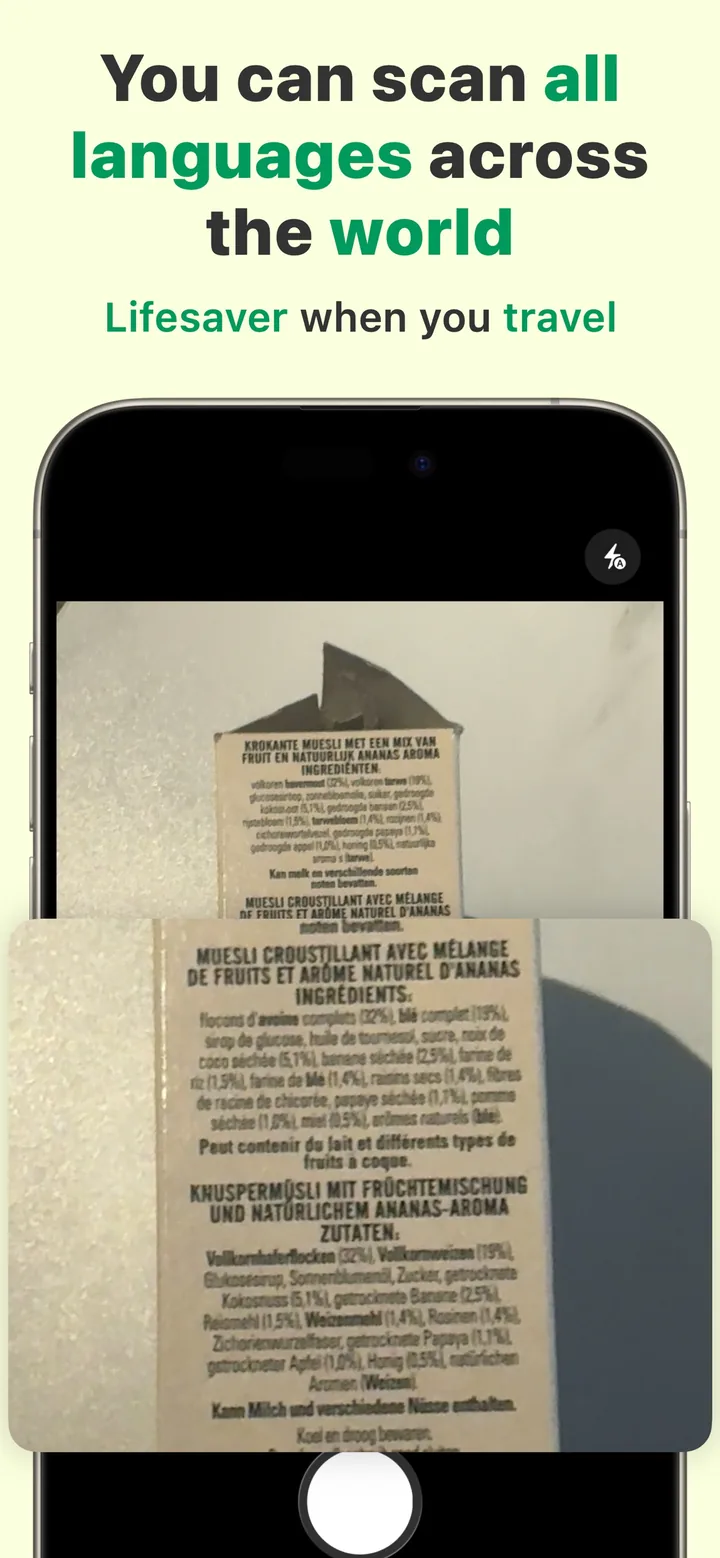
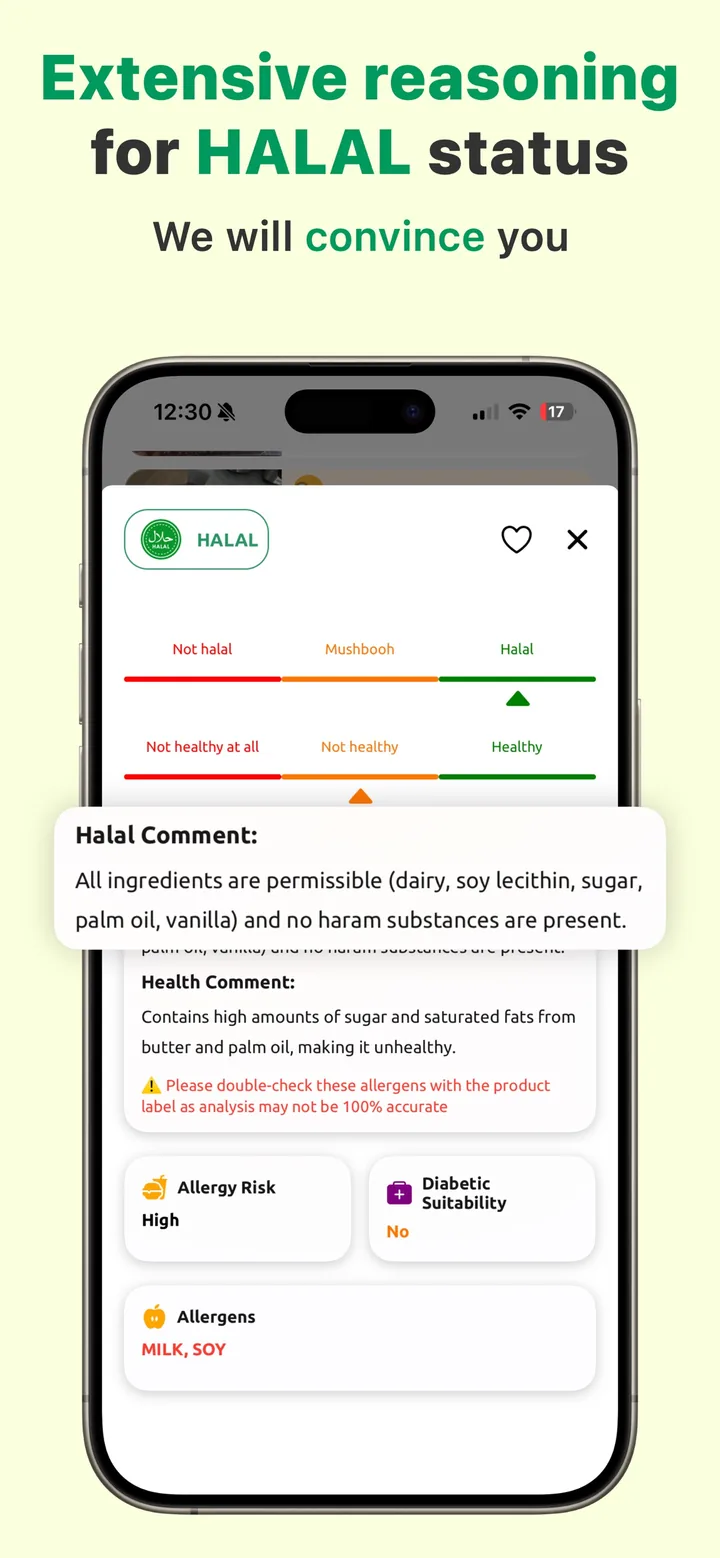
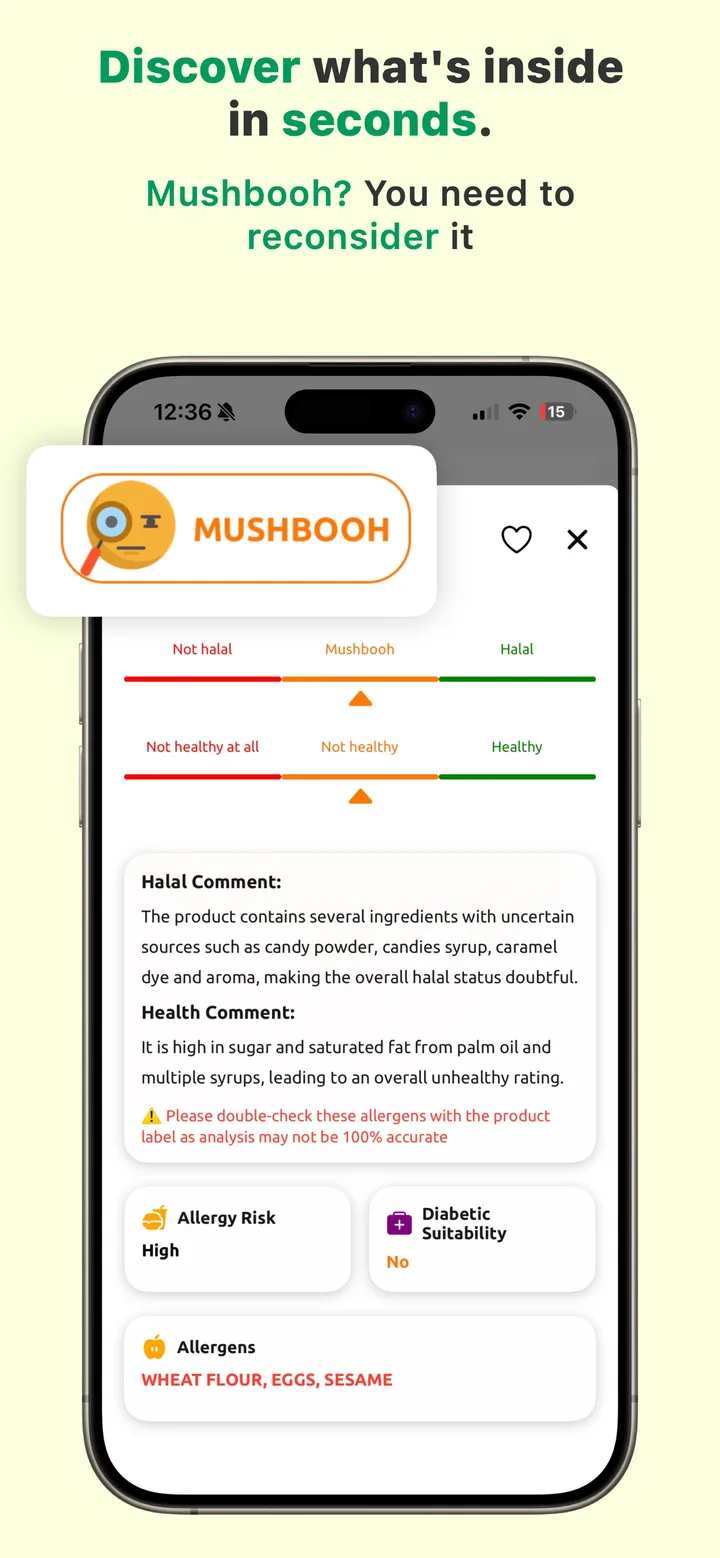
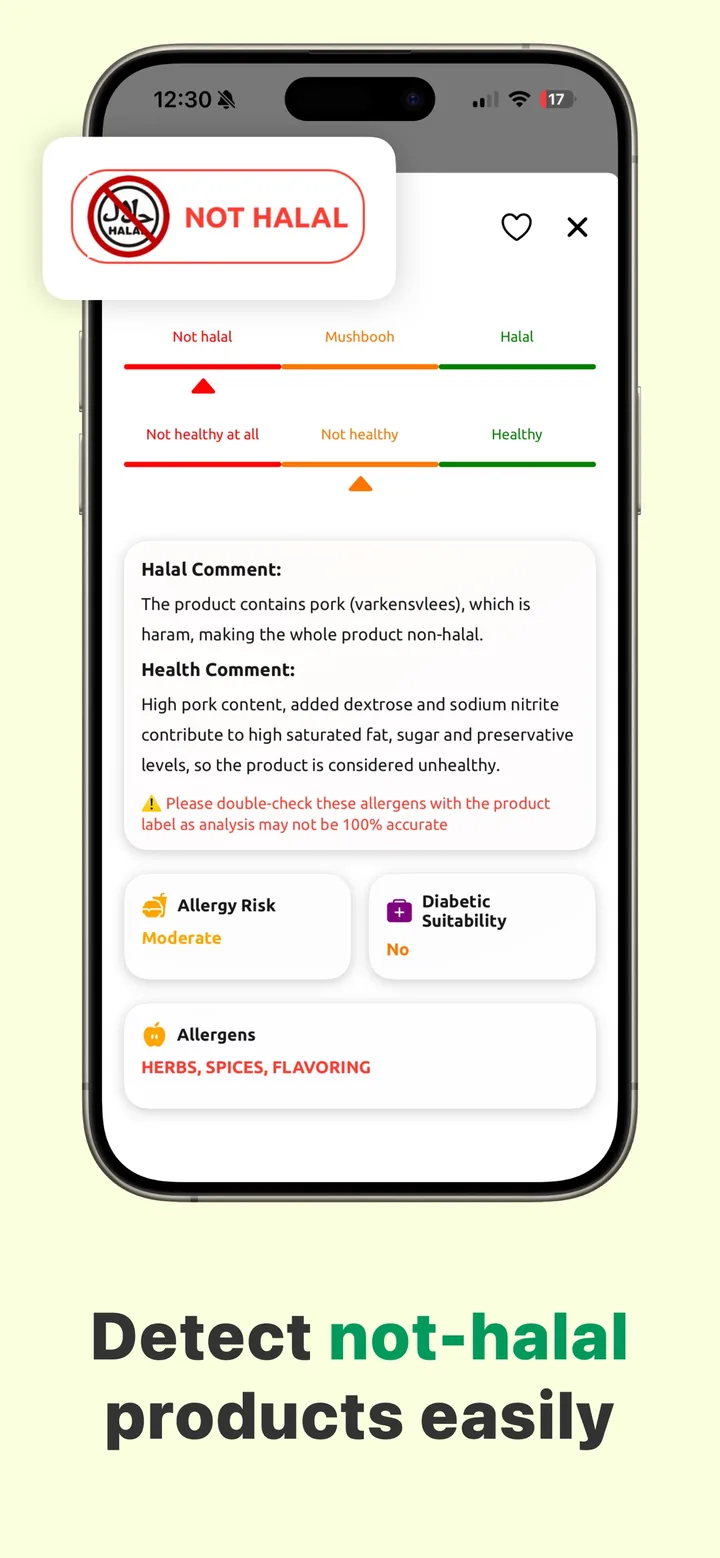
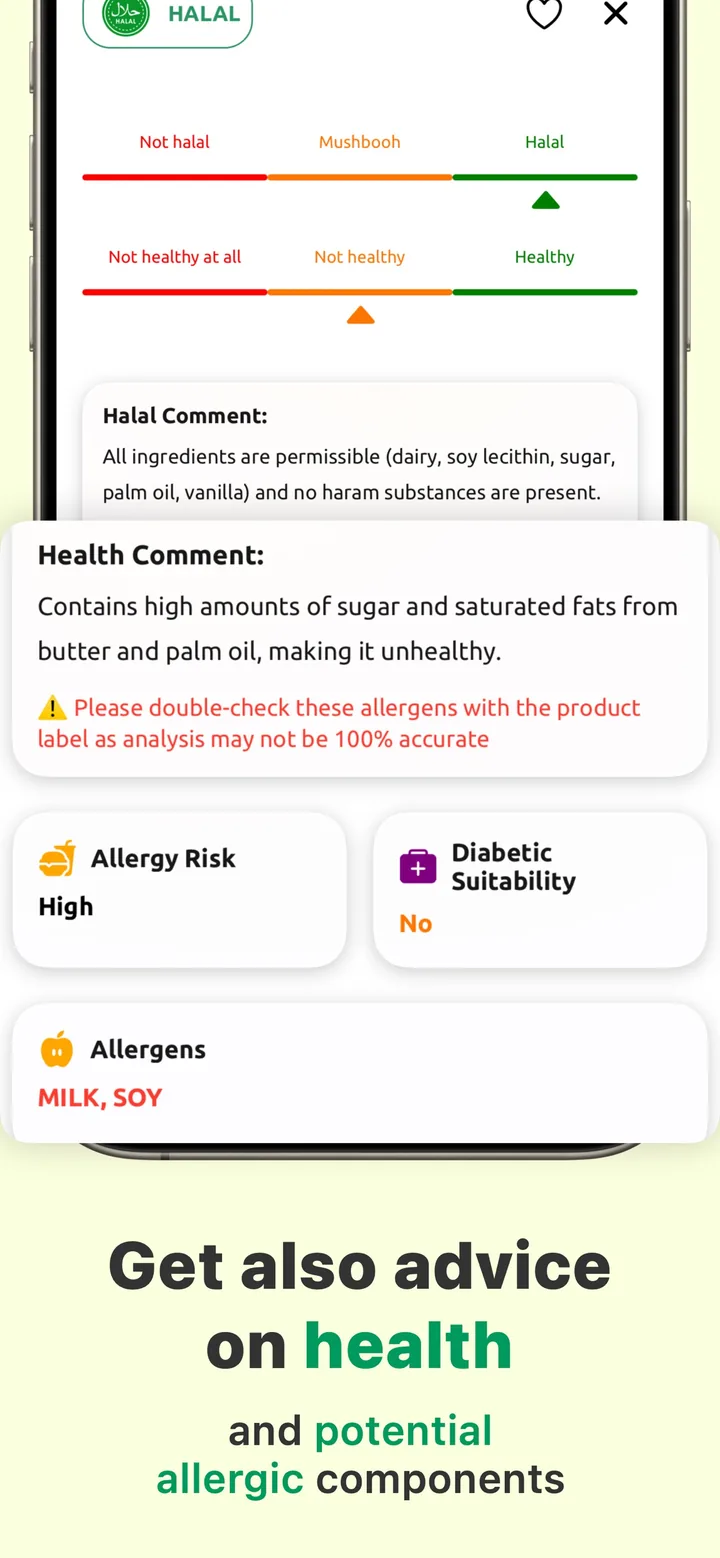
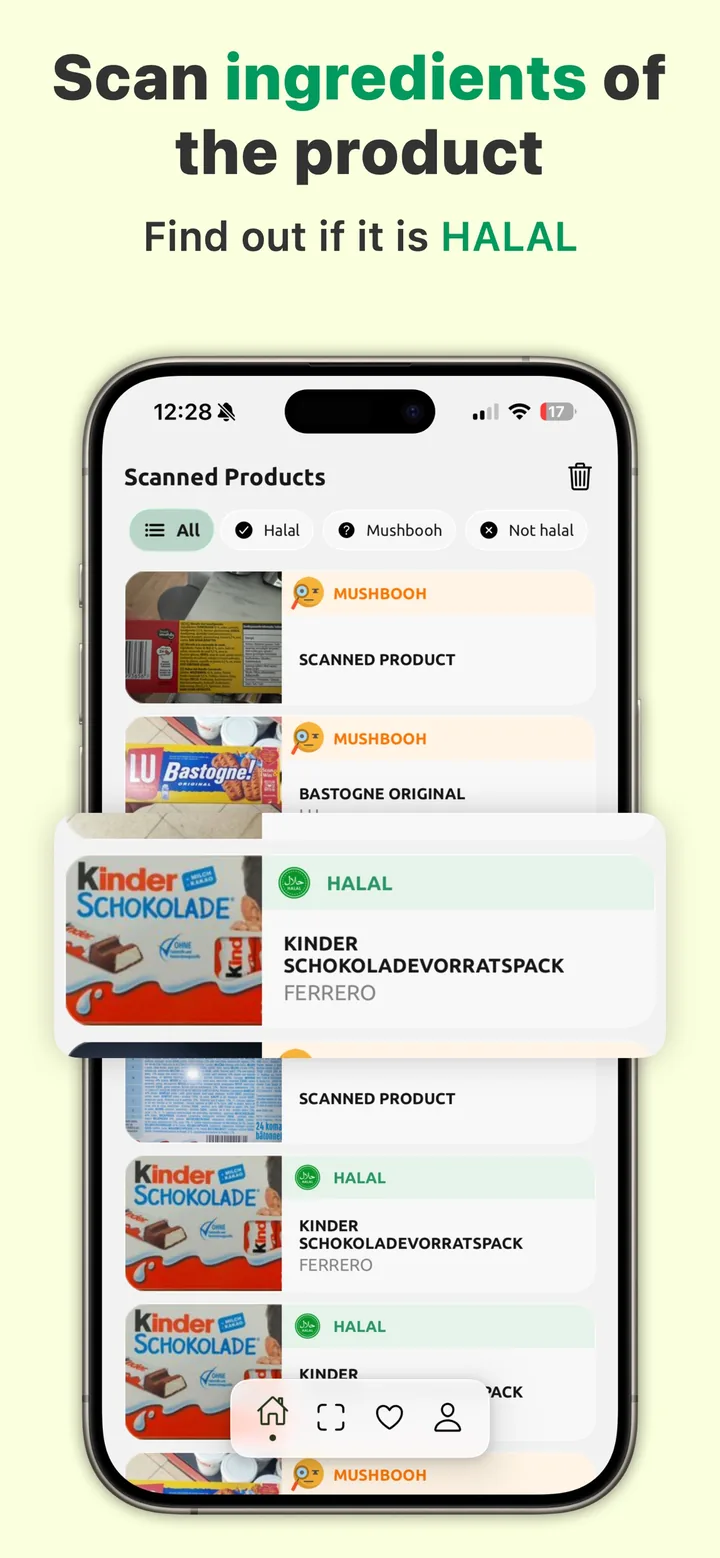
More than a halal check
One scan answers four questions about what's in the pack.
-
Halal status
Halal, mushbooh, or not halal — with a written explanation of which ingredient decided it.
-
Health score
A nutritional read on the same ingredient list, so you can spot the ultra-processed picks.
-
Allergen alerts
Flags common allergens on the label — nuts, dairy, gluten, soy, egg — before you open the pack.
-
Diabetic suitability
Tell the app you're diabetic during setup and every result adds a suitability call.
The ingredients that trip people up
Most doubtful additives are doubtful because a single code covers both plant and animal sources. These are the ones Halal Scanner watches for.
| Ingredient | Usual status | Why |
|---|---|---|
| Gelatin (E441) | Mushbooh | Pork-derived unless the label says bovine, fish, or halal-certified. |
| Mono- & diglycerides (E471) | Mushbooh | Emulsifier made from either vegetable oil or animal fat. The code doesn't distinguish. |
| Glycerol / glycerin (E422) | Mushbooh | Same problem — plant oils and animal tallow both produce it. |
| Carmine / cochineal (E120) | Mushbooh | A red colour extracted from insects. Scholars differ; many avoid it. |
| L-cysteine (E920) | Mushbooh | Dough conditioner sourced from feathers, hair, or bacterial fermentation. |
| Shellac (E904) | Mushbooh | A resin secreted by the lac insect, used to glaze sweets and fruit. |
| Rennet | Mushbooh | Cheese enzyme. Microbial rennet is fine; calf rennet depends on the slaughter. |
| Lard, pork fat, bacon | Not halal | Pork derivatives, named outright on the label. |
| Ethanol as an ingredient | Not halal | Alcohol added as an ingredient, distinct from trace carriers in flavourings. |
| Soy lecithin (E322) | Halal | Plant-derived emulsifier. Egg lecithin is also permissible. |
| Carrageenan (E407) | Halal | Extracted from seaweed — no animal source involved. |
| Pectin (E440) | Halal | A gelling agent from fruit — the usual halal alternative to gelatin. |
Statuses reflect the most common industry sourcing and the majority scholarly view. Rulings vary between schools and certification bodies — Halal Scanner tells you why an ingredient is flagged so the judgement stays yours.
Simple pricing
Start scanning the moment you install. Upgrade only if you run out.
Free
Everything you need to try it
30
scans included
- Barcode and ingredient scanning
- Halal verdict with reasoning
- No account, no card
- 10 bonus scans for leaving a review
Free scans are one-off, not monthly.
PRO
For the weekly shop
Unlimited
scans, weekly / monthly / yearly
- Unlimited product scans
- Health score on every product
- Allergen alerts and ingredient warnings
- Full scan history, any time
Cancel any time. Prices vary by region — see the App Store listing.
What Halal Scanner is — and isn't
Halal Scanner is a research assistant for the supermarket aisle, not a certification body and not a fatwa. It reads the label you show it and explains what each ingredient usually is, which is far faster than looking up twenty E-numbers on your phone.
It can't see what the label doesn't say — hidden processing aids, shared production lines, or the exact source a manufacturer used this batch. For anything you must be certain about, check the pack for a recognised halal certification mark or ask the manufacturer directly.
No account, no tracking of what you eat. Photos are sent for analysis and not kept afterwards. Your scan history lives on your device, and you can delete any of it at any time.
Available in
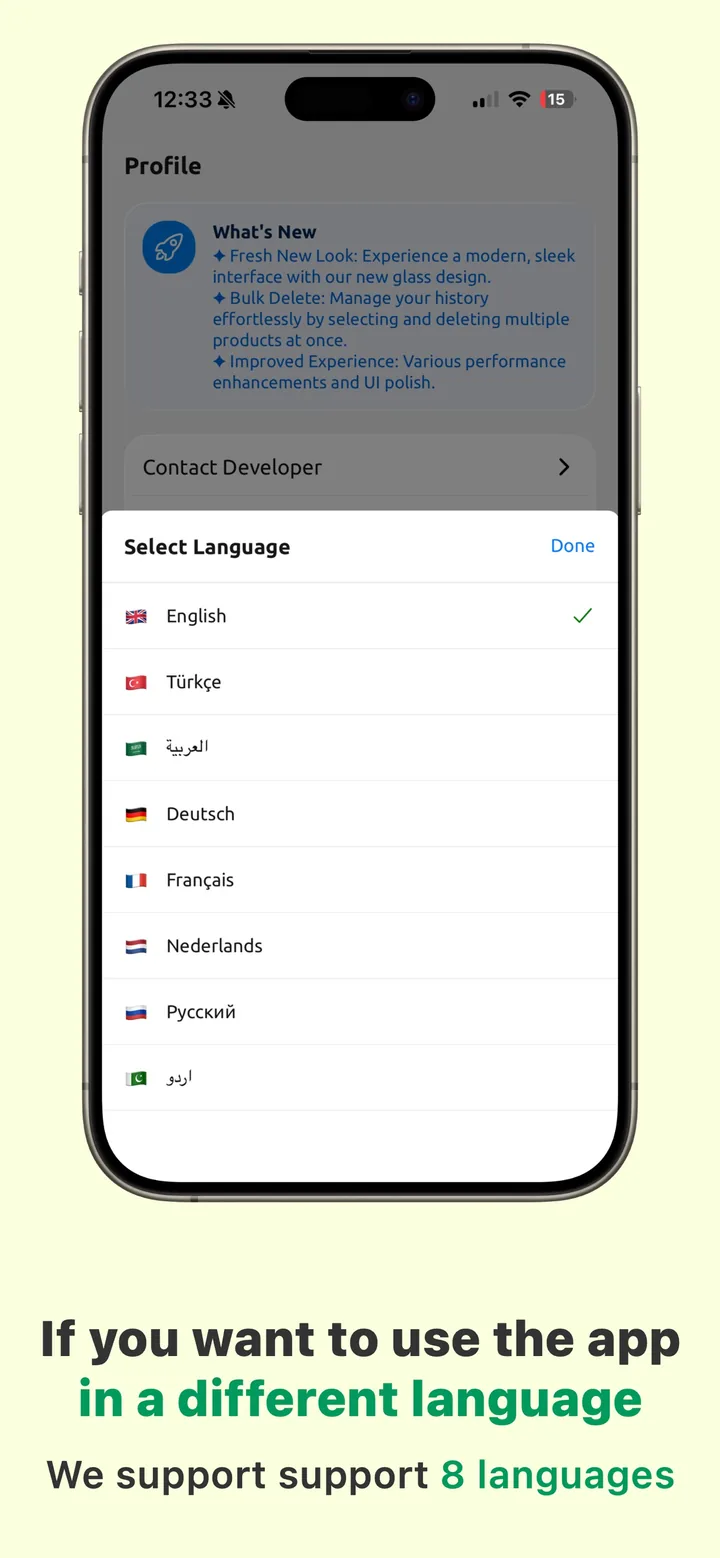
English · العربية · Türkçe · Deutsch · Français · Nederlands · Русский · اردو · پښتو
Frequently asked questions
- Open Halal Scanner and scan the product's barcode. If the product isn't in the database, photograph the ingredient list on the back or side of the pack instead. The app reads each ingredient and returns a halal verdict — halal, mushbooh, or not halal — along with the reason, in about three seconds.
- Mushbooh (مشبوه) means doubtful — neither clearly halal nor clearly forbidden. It usually applies when an ingredient could come from either a permissible or an impermissible source and the label doesn't say which. E471, glycerin, and unspecified gelatin are typical examples. Halal Scanner names the ingredient that caused the doubt so you can check the pack or the manufacturer yourself.
- Very few E-numbers are always impermissible — most are doubtful because one code covers several possible sources. The ones most often flagged are E441 (gelatin), E471 (mono- and diglycerides), E422 (glycerol), E120 (carmine), E904 (shellac), and E920 (L-cysteine). Each is halal when made from plants or by fermentation and questionable when made from animal fat. Halal Scanner flags them as mushbooh and explains why rather than guessing.
- Treat it as a fast second opinion, not a certification. The analysis is only as good as the label it can see, so it can't account for hidden processing aids, shared production lines, or which source a manufacturer used in a particular batch. For anything you need certainty about, look for a recognised halal certification mark on the pack or contact the manufacturer.
- Yes — you get 30 free scans on install, with no account and no card. Leaving a review earns another 10. If you scan often, PRO removes the limit and comes with a 7-day free trial; it's available weekly, monthly, or yearly and can be cancelled any time.
- The barcode database doesn't cover every product in every country, and some entries have no ingredient list. When that happens the app offers to scan the ingredients instead — photograph the ingredient list on the back or side of the pack in good light and you'll get the same full analysis.
- There's no sign-up, so scans aren't tied to a personal account. Photos are sent for analysis and not retained afterwards. Your history and favourites are stored on your device and you can delete individual products or clear them in bulk whenever you like.
- Halal Scanner is an iOS app on the App Store, localised in English, Arabic, Turkish, German, French, Dutch, Russian, Urdu, and Pashto — including full right-to-left layouts for Arabic, Urdu, and Pashto.
Stop squinting at ingredient lists.
Scan it, read the verdict, put it in the basket — or put it back.
Available on iOS — free to download, 30 scans included.